Our method
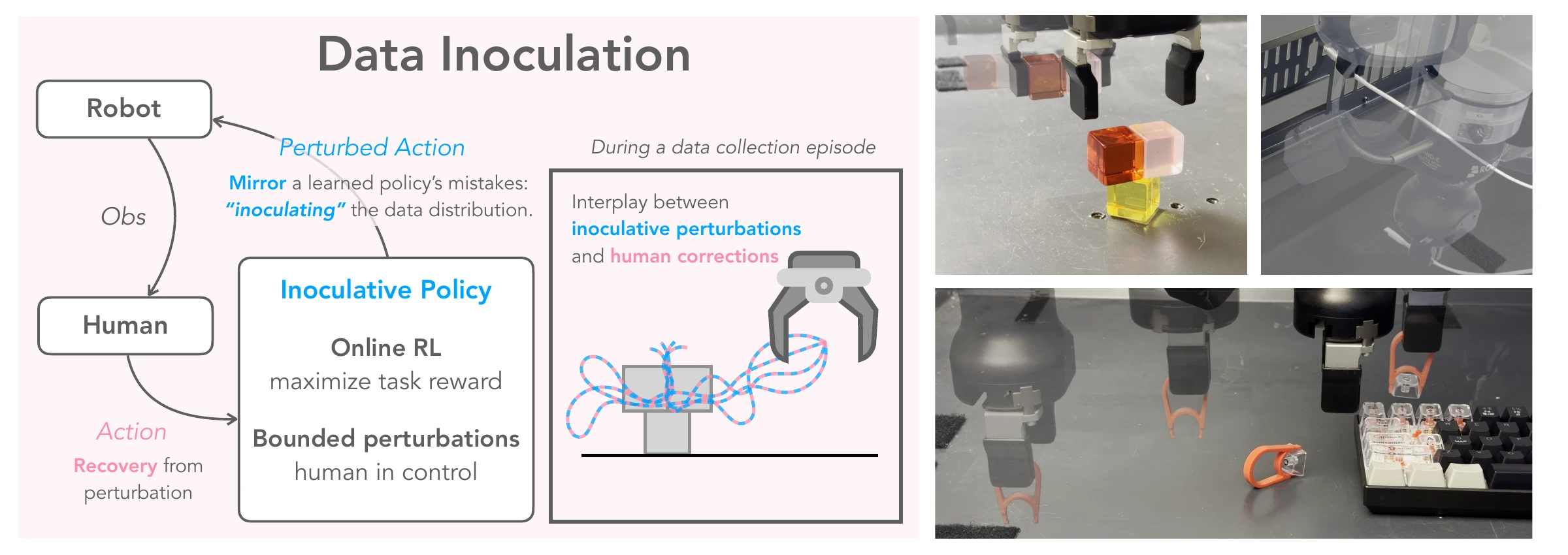
Data Inoculation
A human stays in the loop. A residual policy makes the data more useful.
1Perturb the Human’s Commands
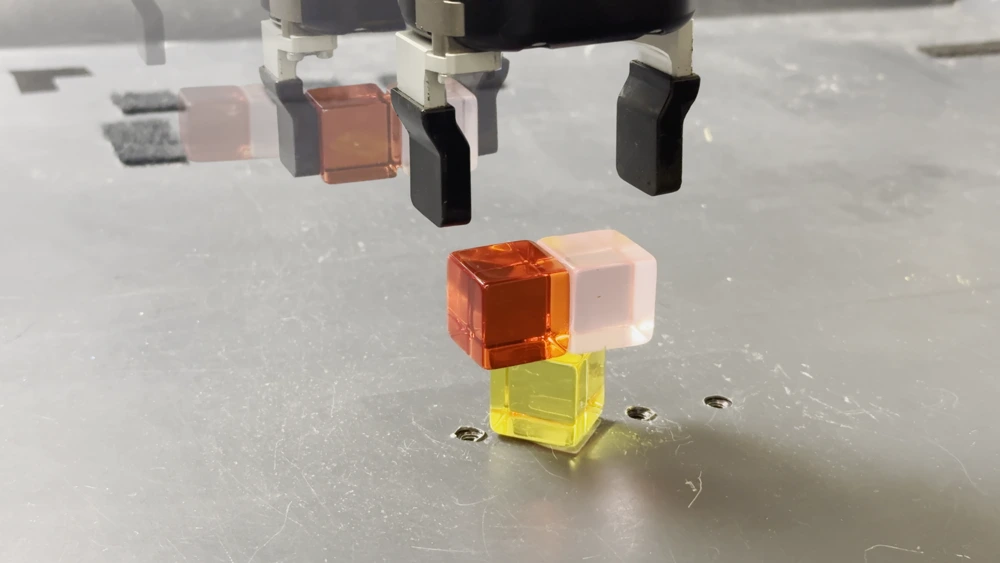
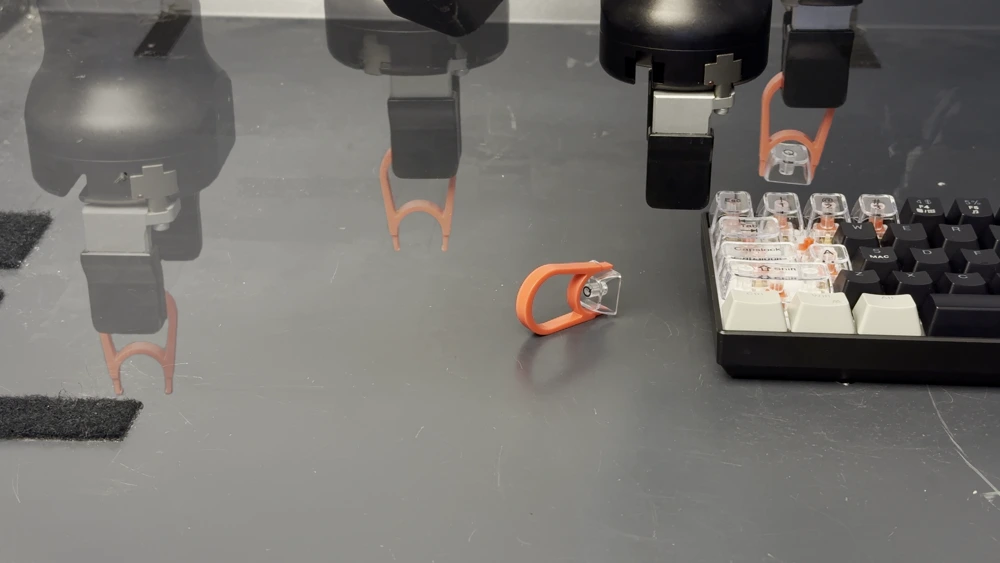
At each step, the inoculative policy observes the robot and the human’s live command, then adds a bounded residual. The human reacts to the deviation through subsequent commands, pairing perturbations with corrective demonstrations.
Executed actionãt=Human commandat+Learned perturbationα Δt
The residual is bounded so the executed action deviates from the human’s command by at most α in the L∞ norm.
2Learn During Data Collection
An asynchronous online RL loop trains the residual policy on the growing dataset to maximize task reward. Because it shares the reward-maximizing objective used for downstream policy extraction, its deviations are expected to resemble the mistakes a learned policy would make.
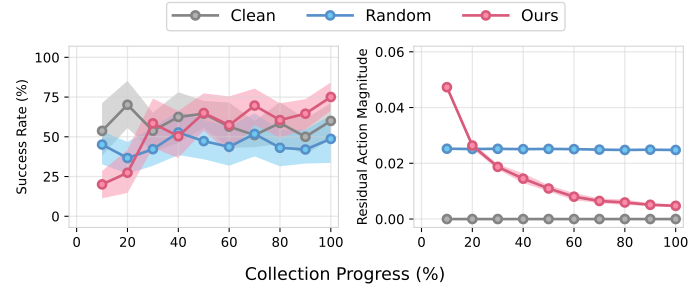
Early critic errors lead to deviations that elicit recovery. As learning progresses, the residual policy can also assist the teleoperator. Perturbations are held fixed for 0.5 seconds, giving the human time to respond.
3Train on the Inoculated Dataset
Use the collected data to train an autonomous policy with behavioral cloning or offline RL. The dataset now includes both successful behavior and human corrections in states that clean teleoperation may rarely visit.
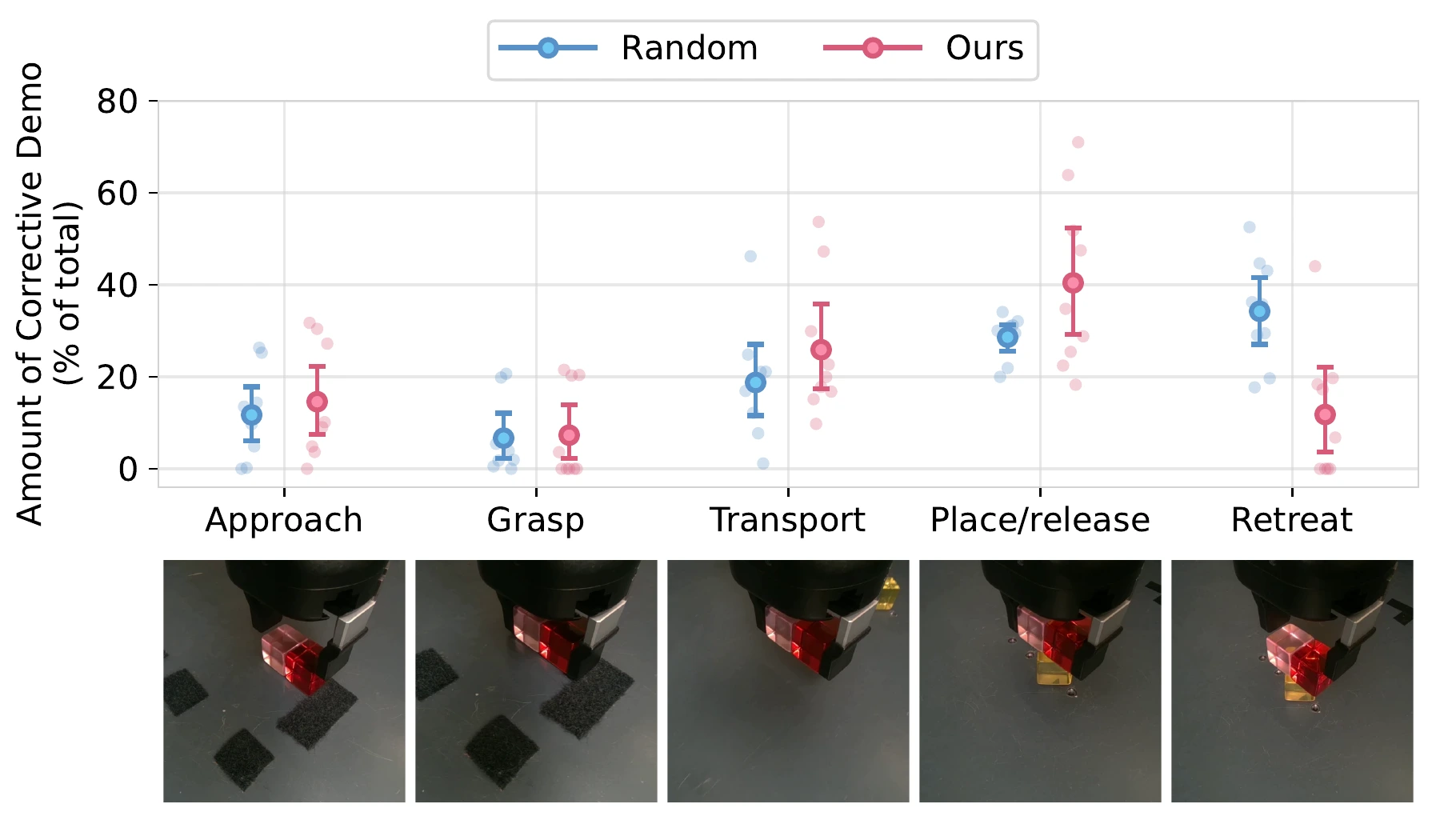
Why learn the perturbations? Random noise can spend the collection budget on irrelevant movements. DI adapts to the task, eliciting corrections where precision matters most.